Situation
Before this project, everything Spitex Schwab had to say about itself was in printed brochures. They worked for people already in contact with the company. For anyone searching online, the company did not exist.
Spitex Schwab AG is an independent home-care provider based in Bern. Its nurses and carers support people of all ages in their own homes, so they can keep their independence there, with services ranging from basic and medical care to psychiatric, palliative and oncology care, dementia support, a children’s Spitex and Spitexpress, a 24-hour emergency service. Spitex Schwab came to us directly in 2025.
Before this project, everything Spitex Schwab had to say about itself was in printed brochures. They worked for people already in contact with the company. For anyone searching online, the company did not exist.
That gap matters more in home care than in most sectors. The need for care often arrives suddenly, after a fall or a hospital stay, and people look for help quickly and under pressure.
The work started with a content audit. Together with the client we went through the brochures and every service Spitex Schwab offers, a long list written for print and for people who already knew the company. The client also told us something that shaped everything after it: in most cases, first contact comes from a son or daughter arranging care for a parent, not from the person who needs it.
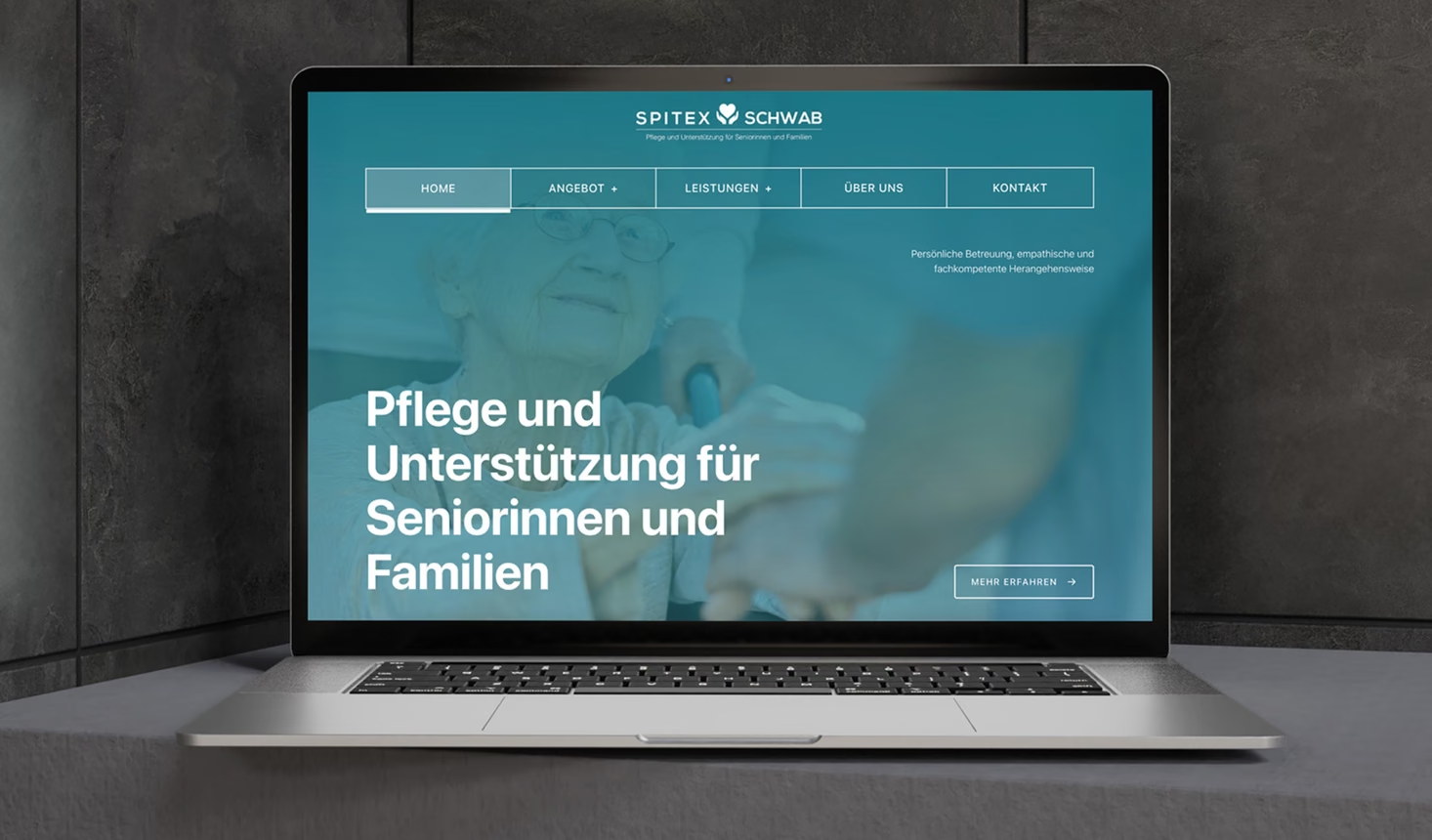
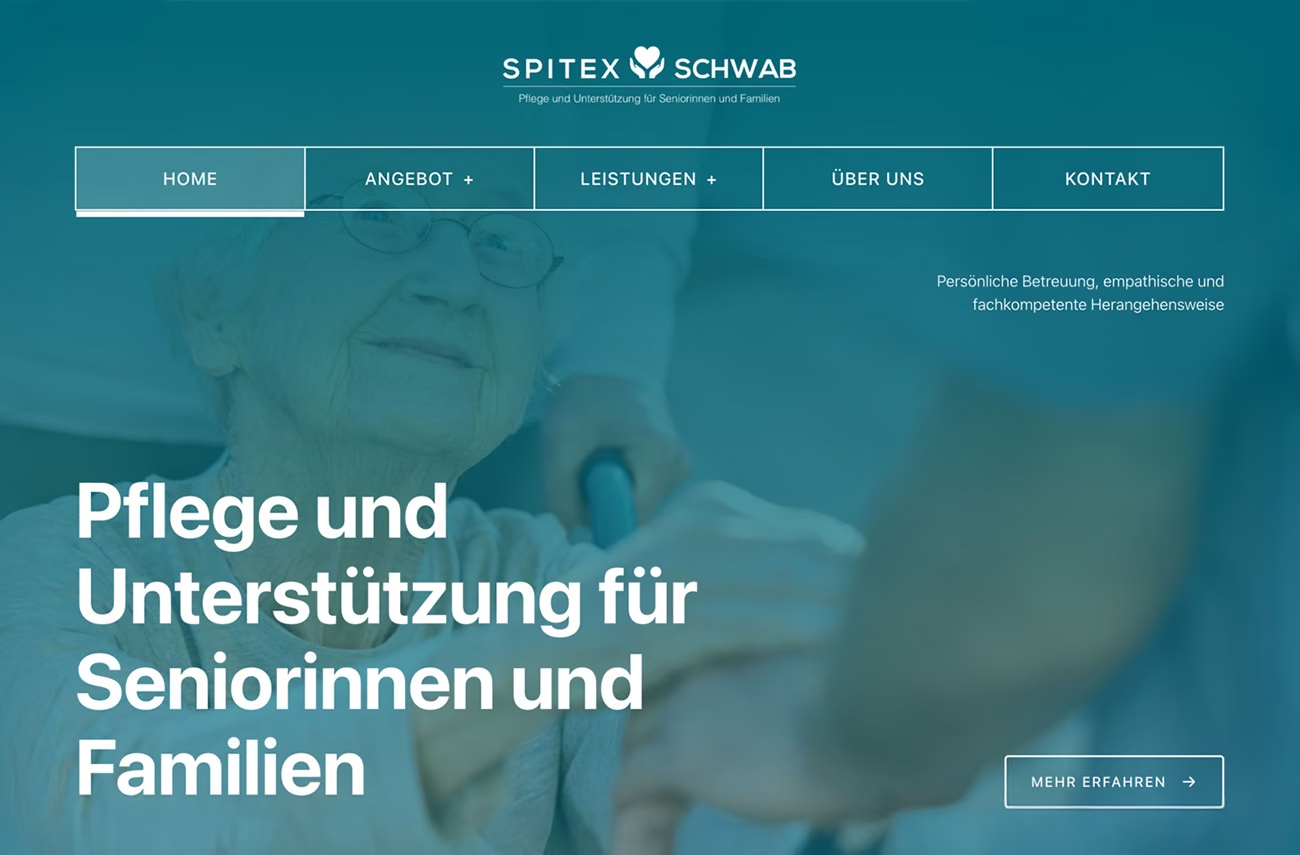
We then reviewed leading Spitex organisations across Switzerland, looking at how they explain their services, how they handle first contact, and how quickly a relative can find what they need. The review turned up one thing worth keeping and one worth fixing. The design of the best sites was simple and uncluttered, with no visual overload, and that became the benchmark for the look. The problem was the information. Explaining care properly takes words, so the amount of text was not the issue in itself. The issue was where it lived: information was scattered across the site, and a relative had to piece answers together from several pages.
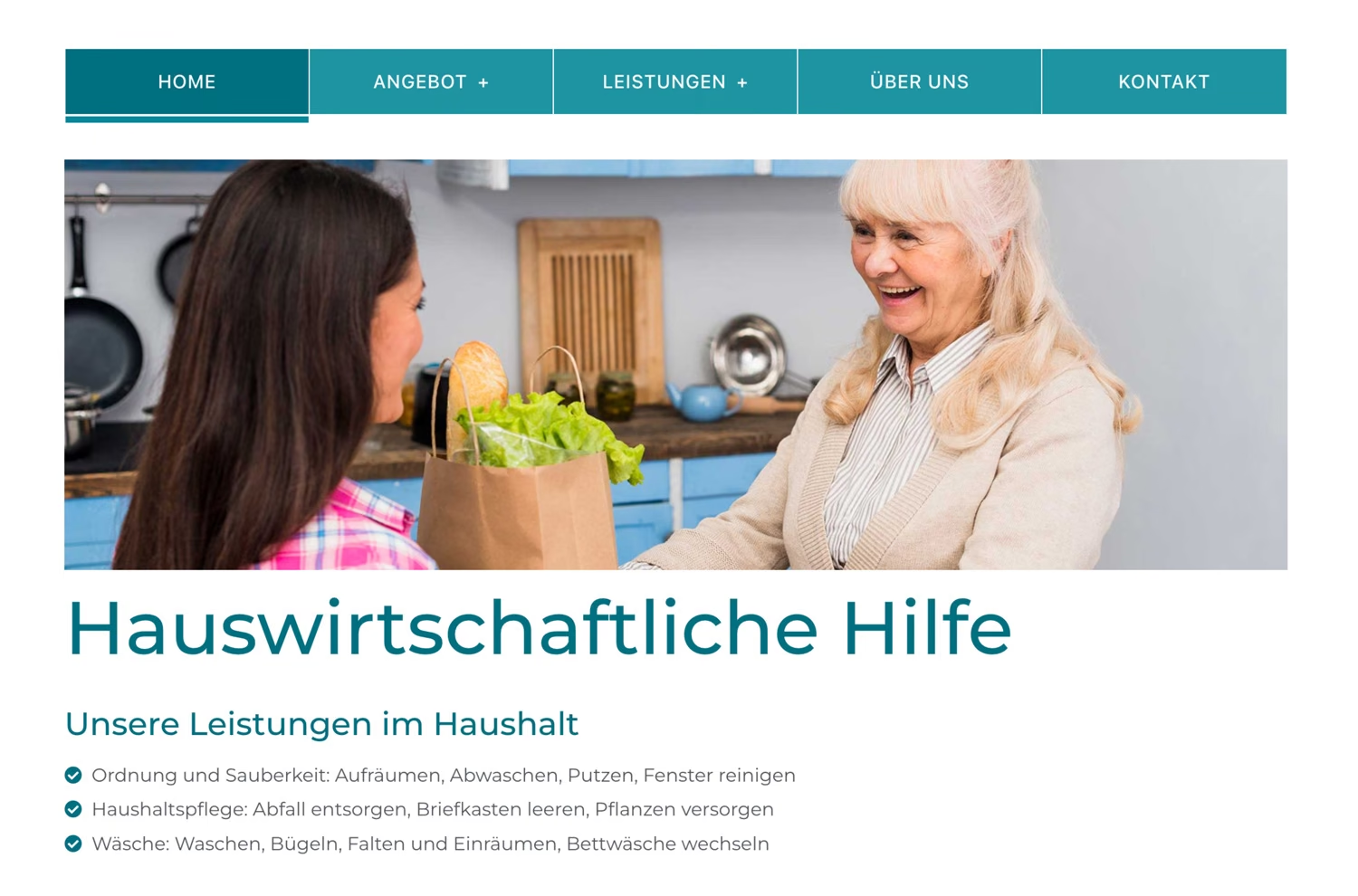
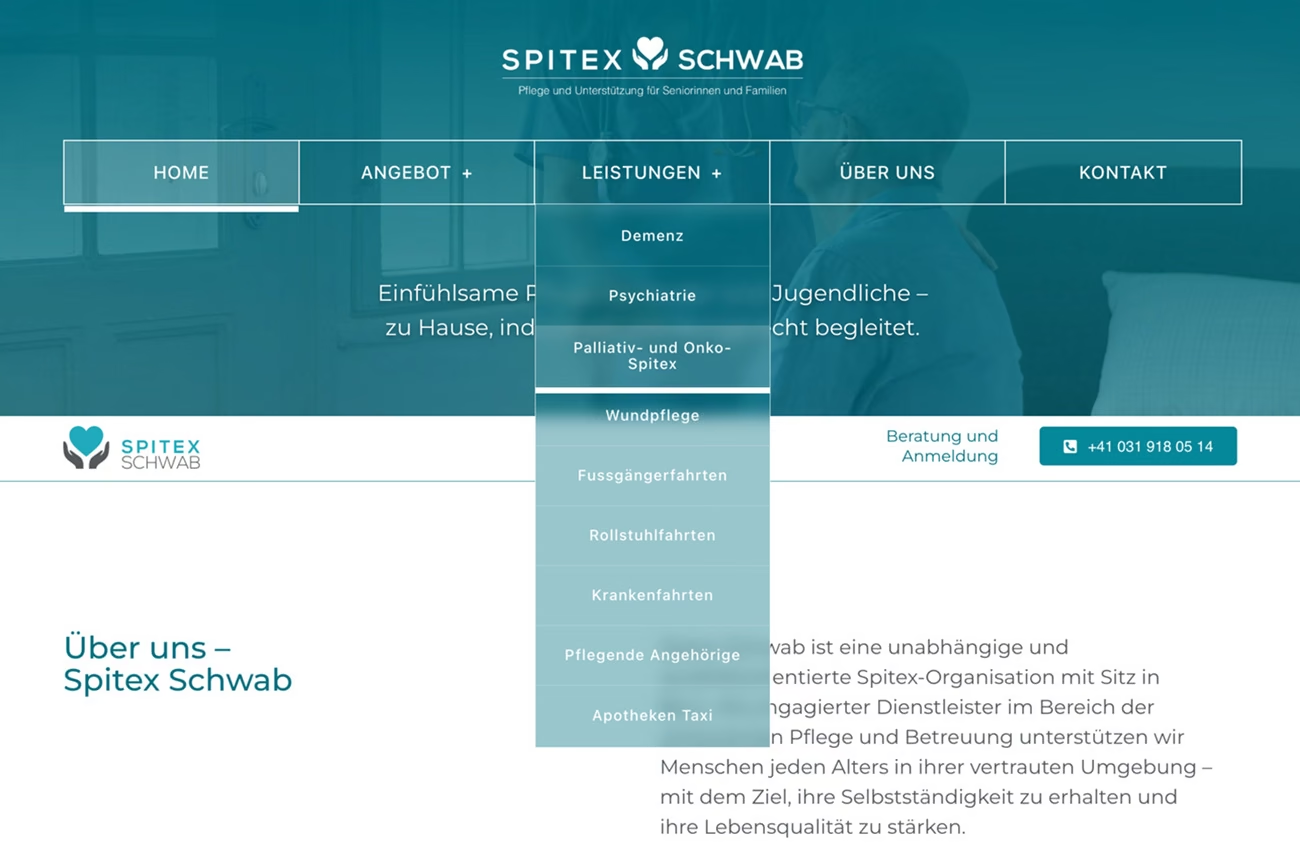
That set the priority for the information architecture. We reorganised Spitex Schwab’s services under five headings a relative can grasp at once, care, household help, personal support, coordination and the 24-hour Spitexpress, with one page per service, so every answer sits in one predictable place.
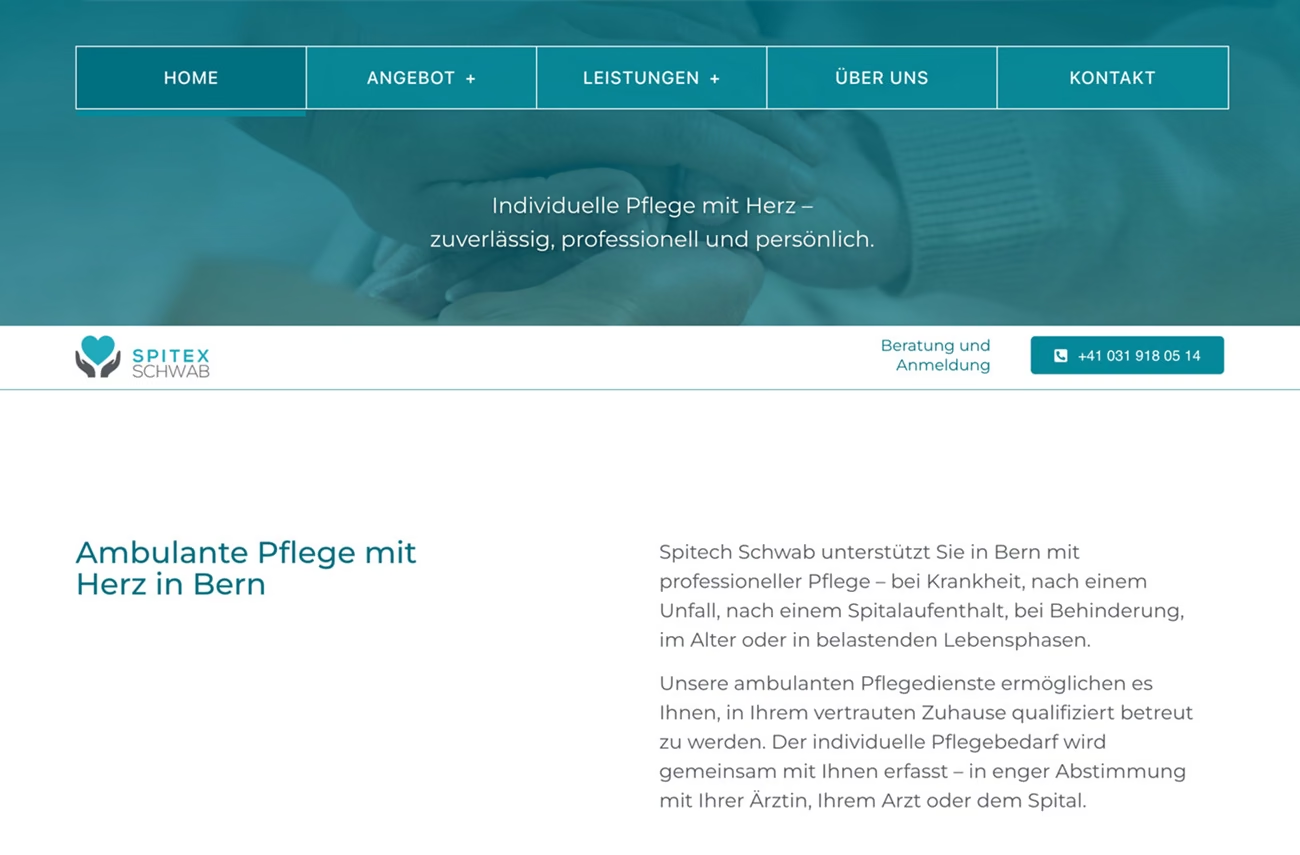
Text large enough to read without effort. Body text is set larger than usual, so nobody has to zoom in or lean closer, and a tired reader can take in a page at a glance.
The phone number never leaves the screen. For many families the first step is a conversation, not a form. The number stays in view throughout the site, so calling is always the easiest thing to do.
Care described in everyday words. Services are explained the way a relative would ask about them, not in the terminology of the care sector.
Fewer steps to contact. Getting in touch takes as few steps as possible, and the contact form asks only for what Spitex needs to call back.