Situation
Building Jetonikeramika’s first website raised a question before any design did: what was it for? A high-end ceramics brand could easily become an online catalogue competing on product specs, but that isn’t how this company sells.
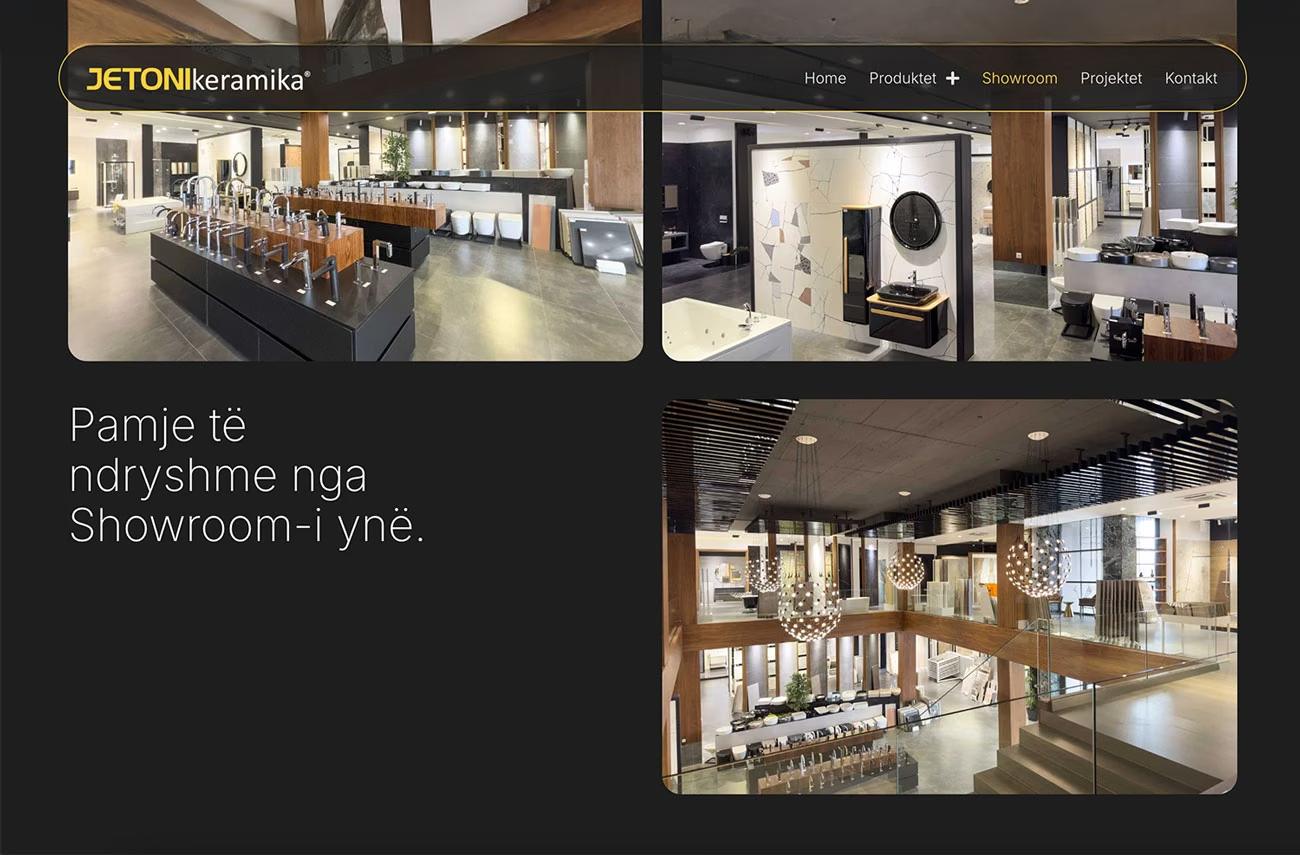
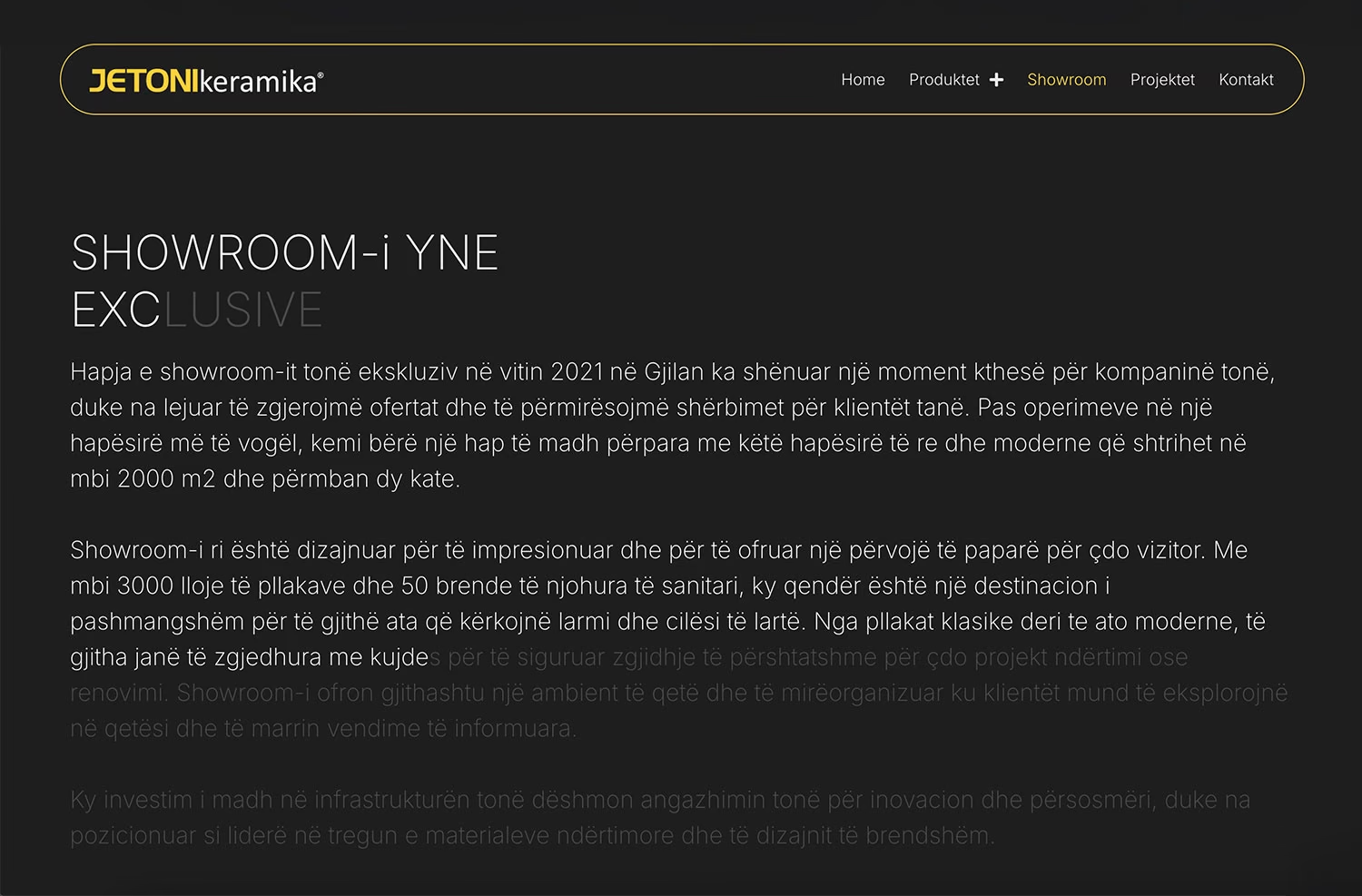
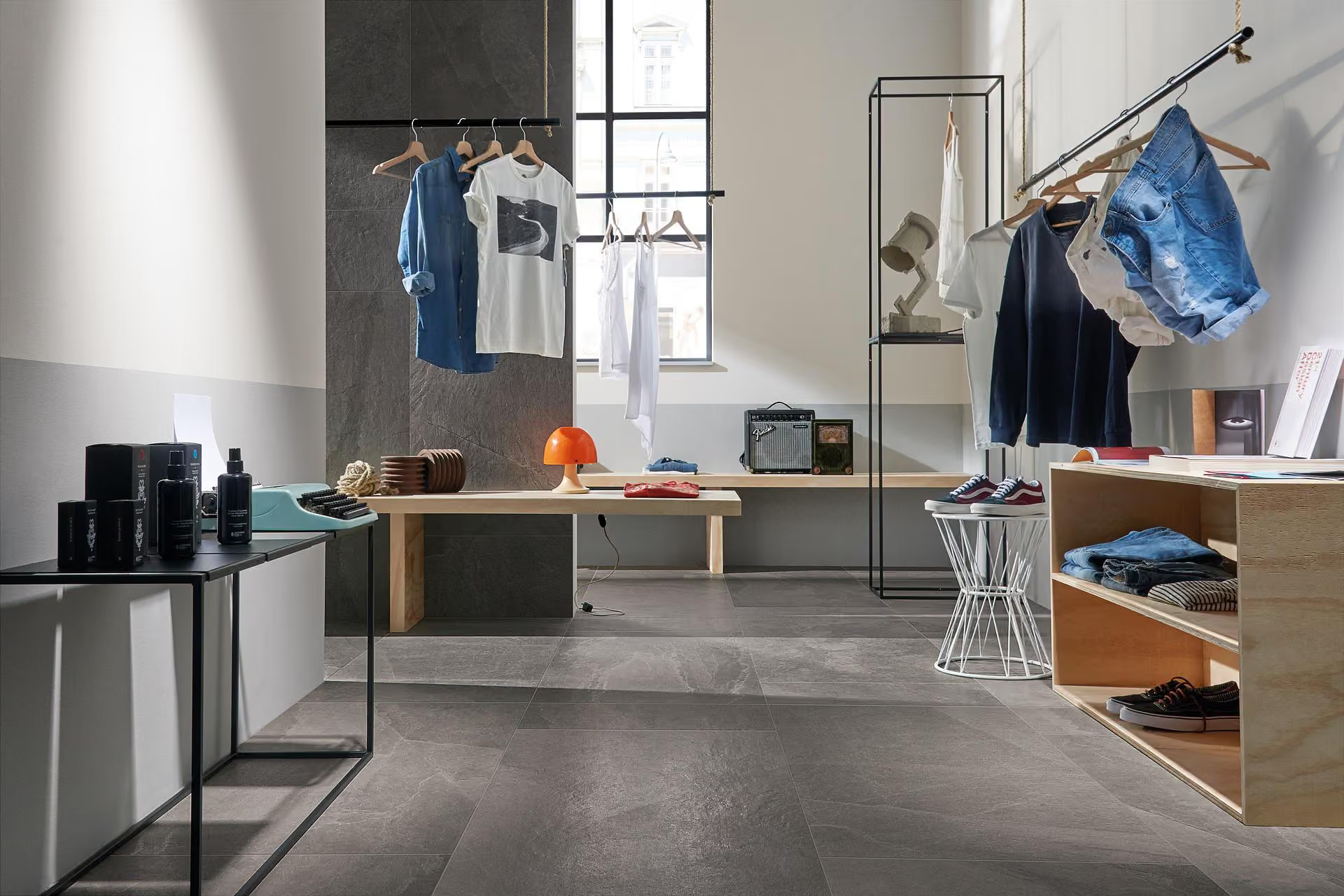
Jetonikeramika’s business happens in a 2,500 m² showroom, where customers see, touch and choose premium ceramics and tiles for bathrooms and living spaces. It sells to private clients and contractors alike. The project came to Mardal in 2026, and we led the research, design and build.
Building Jetonikeramika’s first website raised a question before any design did: what was it for? A high-end ceramics brand could easily become an online catalogue competing on product specs, but that isn’t how this company sells.
The site had to express its philosophy, the brands it carries and the range it offers, in a way that matched what a customer feels on arrival at the showroom.
We researched how ceramics and interior brands present themselves in the Kosovo market, and asked the client how their customers get from first hearing of the brand to buying.
The answer was clear. Sales are made in person at the showroom, with advertising bringing people in, and none of them happen online. So a visitor to the website is not yet a buyer. They are someone deciding whether the showroom is worth the trip.
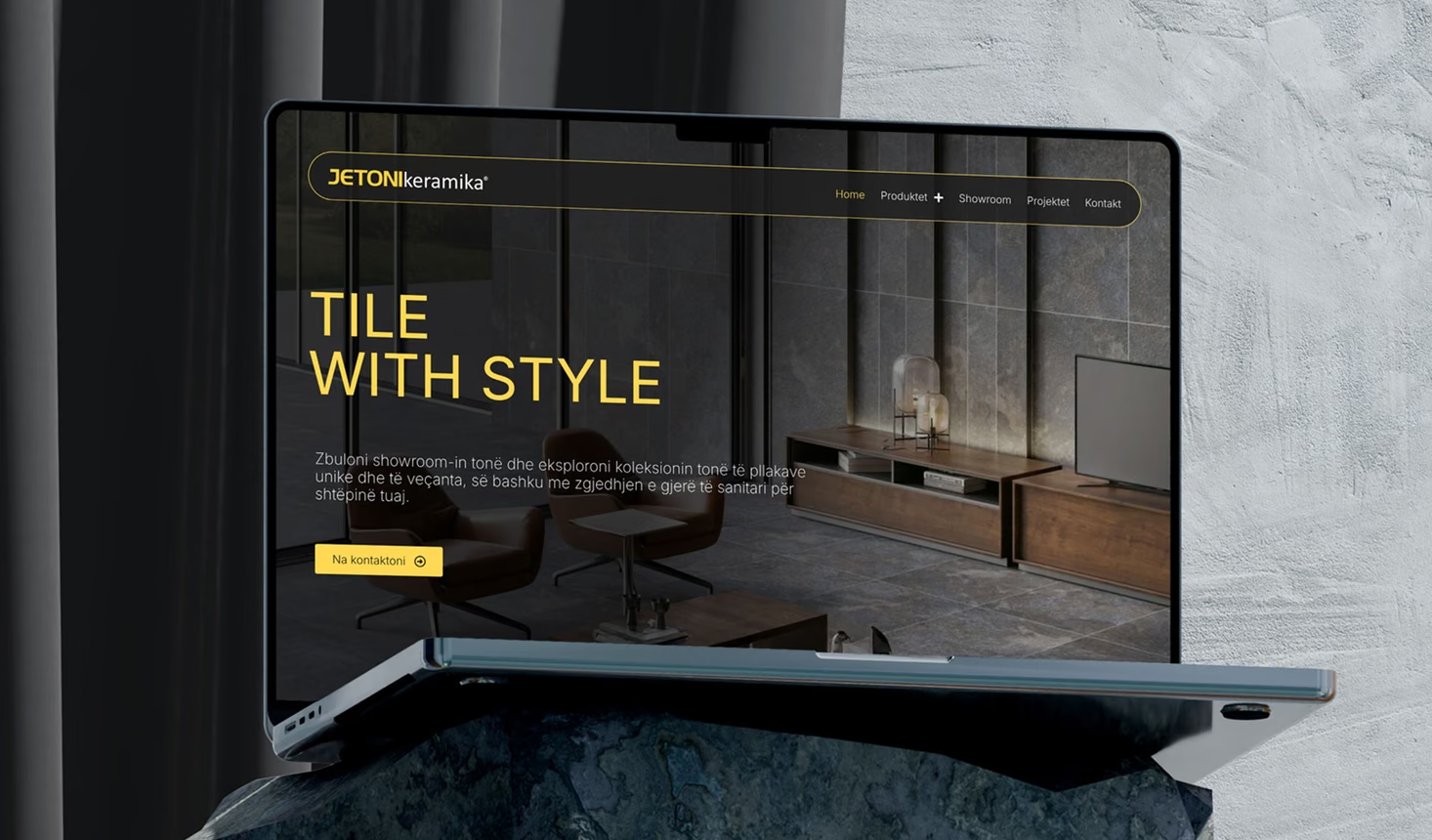
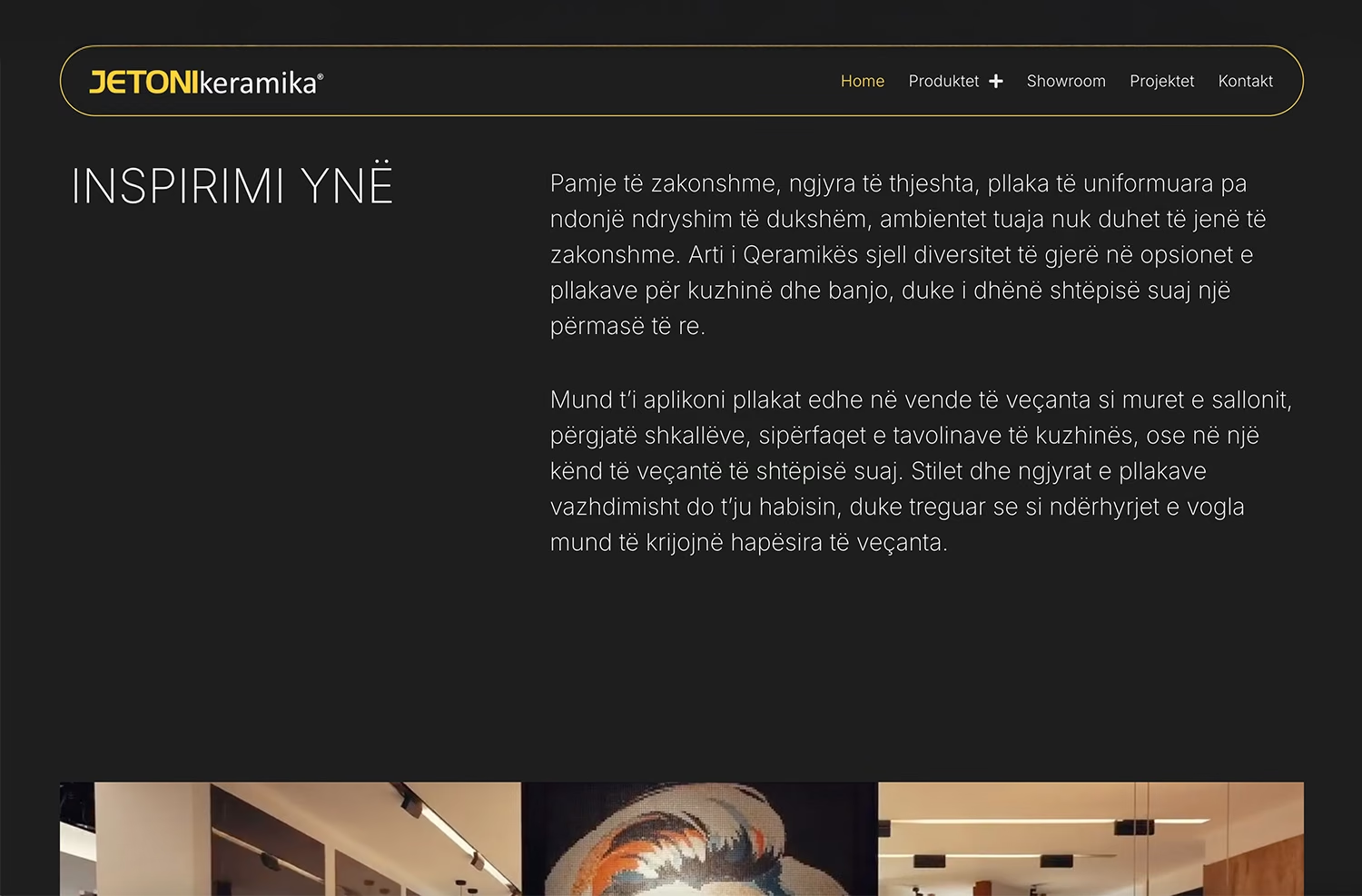
The philosophy leads. The homepage opens with what the company stands for, not a product grid. For a brand competing on quality rather than price, that story is the reason to choose it.
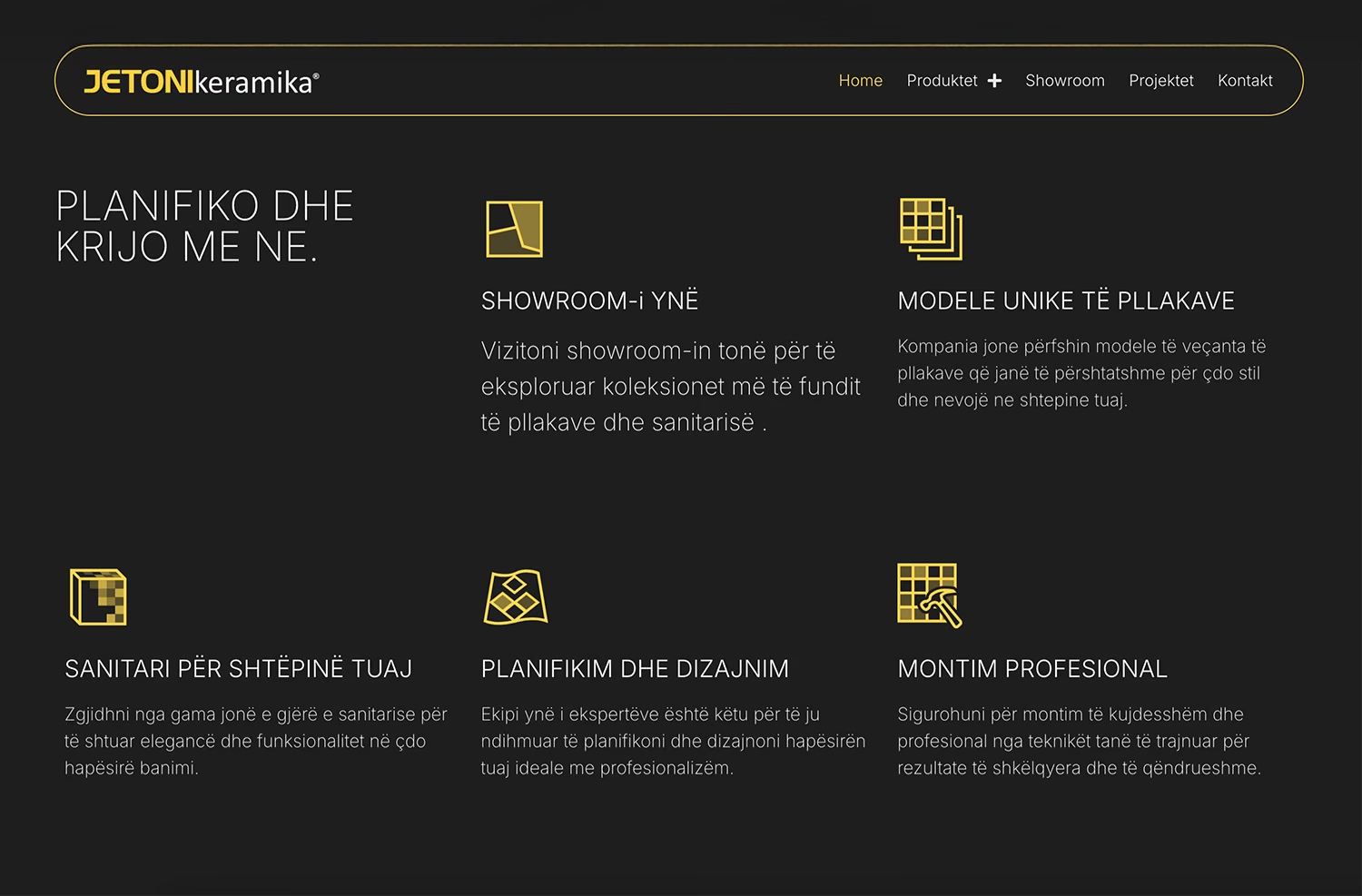
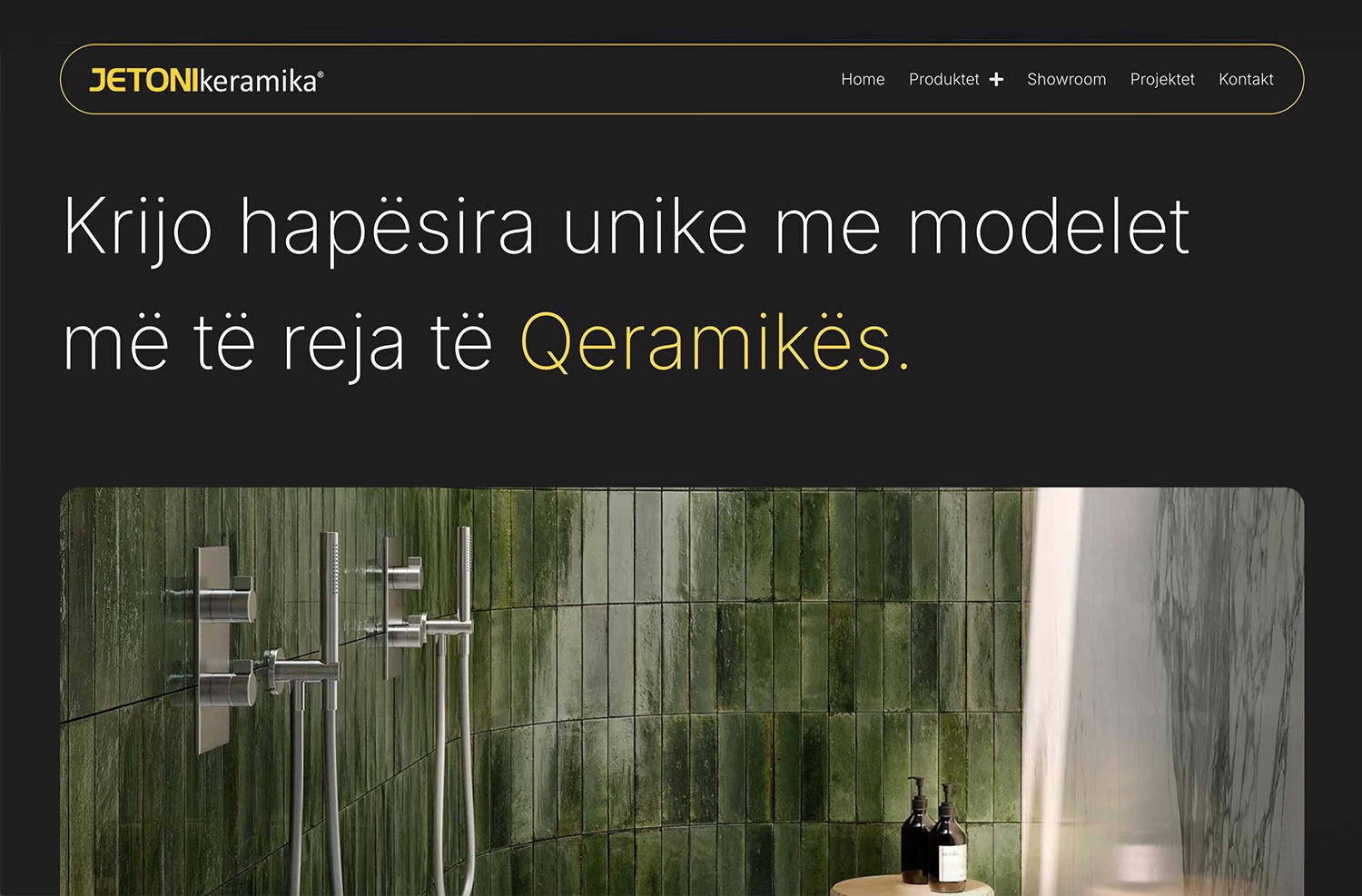
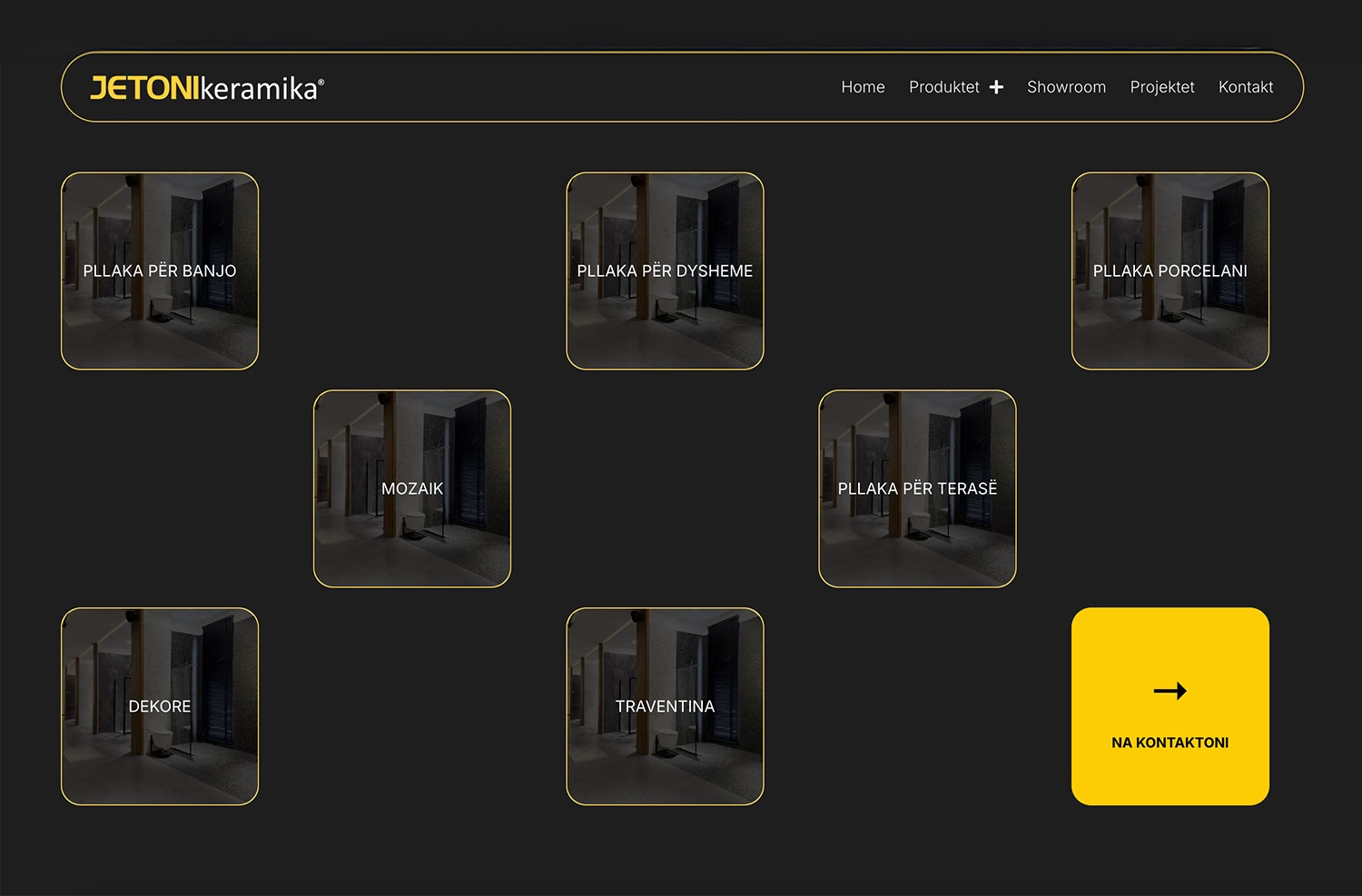
The catalogue informs the visit. Brands and ranges are presented so visitors can understand the breadth of what’s available and arrive at the showroom already knowing what interests them. The final choice is made in person, under real light, with the product in hand.
The showroom is the call to action. Where another site would push a Buy button, this one points to the showroom: where it is, when it’s open and how to get there. That trip is the outcome the whole site is built around.